
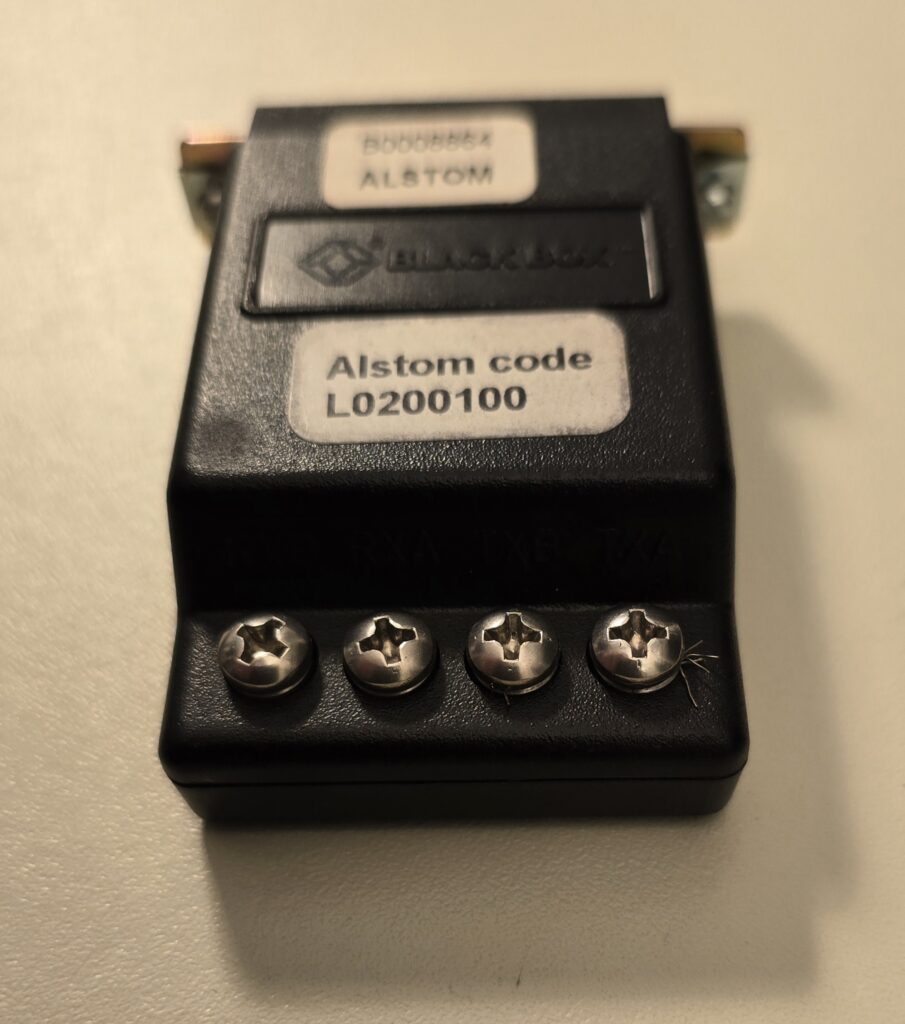
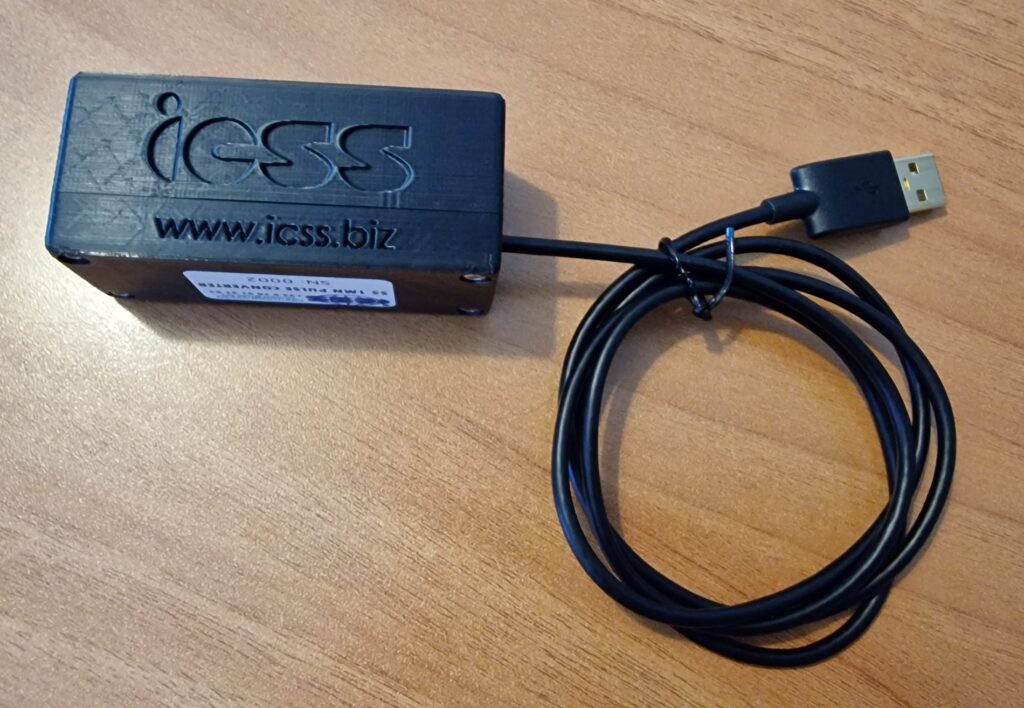
ICSS developed a hardware and software one-minute pulse converter to preserve the synchronisation pulse of a ALSPA Centralog Series 5 after virtualisation of its Windows XP workstation. The solution converts a 24 V industrial pulse into a serial signal that can be used by the virtual machine, then recreates the RS-232 BREAK condition expected by the MTX Kernel.
This development solves a specific problem that simple COM-port redirection does not always address: preserving end to end a legacy timing function that depends on an electrical interface, serial-link behaviour and Centralog software.
Why a virtual serial port is not always sufficient
Hypervisors can present a physical serial port, USB-to-serial device, named pipe or network link to a virtual machine. These mechanisms suit many protocols based on byte exchanges, but do not necessarily reproduce every electrical and timing state of a legacy RS-232 connection.
A BREAK condition is not an ordinary character. It holds the serial line in a defined state for a specified duration. Its generation, duration and propagation may depend on the driver, USB-to-serial converter, virtual COM port and virtual-machine scheduling. A chain that transports data correctly may therefore fail to reproduce the specific signal expected by a legacy application.
For Centralog, the requirement was not simply to redirect an RS-232 link. A 24 V pulse from the plant had to be detected, filtered, transported to the virtualised Windows XP workstation and presented to MTX Kernel in exactly the form of the external synchronisation event it had historically used.
Common problems with legacy serial applications
- A virtual COM port is visible in Windows, but the legacy application cannot open it or expects a specific port number.
- Ordinary serial data are carried, but specific RS-232 line states, particularly
BREAK, do not pass correctly through every layer. - A USB-to-RS-232 adapter generates the signal with a different duration or behaviour from a physical UART.
- Virtual-machine latency and scheduling make a solution based solely on uncontrolled software timing inadequate.
- Diagnostics cannot easily distinguish a missing field pulse, loss during serial transport and failure by the application to recognise the event.
A complete chain designed for ALSPA Centralog
- An electronic interface receives the industrial pulse and provides the required electrical adaptation.
- A microcontroller and its firmware detect the edge, filter contact bounce and locally confirm receipt of the pulse with an LED.
- A USB-to-serial link transmits the event to the Windows XP virtual machine without requiring a legacy physical computer.
- An application developed by ICSS converts the received event into a
BREAKcondition of the required duration on a virtual serial port. - The
MTX Kernelthen receives the synchronisation pulse on the COM port used by the Centralog configuration. - An installer prepares the virtual ports, application and its launch with the Centralog environment.
The value of the solution lies in controlling this entire chain. It combines in-depth knowledge of ALSPA Centralog, electronics, embedded firmware, RS-232 serial communication, virtual COM ports and software development under Windows XP.
End-to-end diagnostics
The solution was designed to remain understandable and maintainable on site. The LED confirms arrival of the physical pulse. The application shows its connection to the converter, identifies the firmware version and logs every pulse received. Centralog tools then confirm that the event has been recognised by the MTX Kernel.
In the event of a fault, this instrumentation quickly locates the break between the 24 V input, converter, USB connection, virtual machine, application, virtual serial port and Centralog. It avoids treating the function as a black box that is difficult to troubleshoot.
Applications
The pulse converter is intended for ALSPA Centralog installations whose virtualisation must preserve a one-minute pulse or external synchronisation pulse received over a serial link. It can address situations including:
- Virtualisation of a Centralog Series 5 workstation under Windows XP.
- Removal of dependence on a legacy PC with a physical serial port.
- A virtual COM port carrying bytes but not correctly carrying the
BREAK. - Replacement of a synchronisation interface that has become obsolete or difficult to maintain.
- A need to diagnose the field pulse, serial transport and Centralog reception separately.
Supply and adaptation to the installation
The configuration must be checked before supply: nature and electrical level of the pulse, wiring, Centralog version, virtualisation environment, host system and serial-port assignments. Depending on the requirement, the service may include the converter, its firmware, the Windows XP application, virtual-port installation, documentation and integration support.
An implementation example is presented in the ICSS projects and case studies section. This page describes the available solution without duplicating details of the customer project.