
ICSS provides diagnostics, repair and qualification for electronic boards and equipment used in ALSPA P320 systems. This service is intended in particular for operators facing module obsolescence, a lack of new spare parts or unavailable manufacturer support.
Repair is not limited to replacing a failed component. Knowledge of each board’s function within the system makes it possible to correlate symptoms observed on site with laboratory measurements and then define suitable tests before return to service.
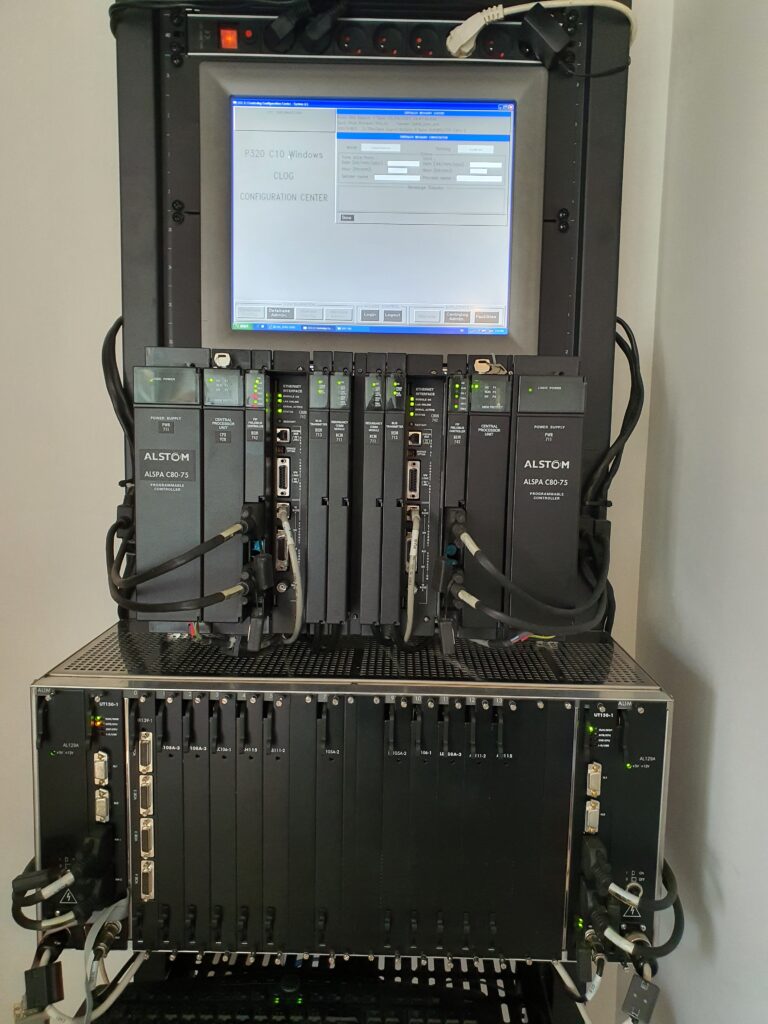
CE2000 and C80-75.From diagnostics to return to service
Fault analysis
Diagnostics begin with the exact board reference, revision, configuration and symptoms encountered at the plant. Where available, alarms, conditions under which the fault occurs, measurements taken on site and comparison with a working module help guide the investigation and avoid treating only a consequence of the failure.
Electronic checks and repair
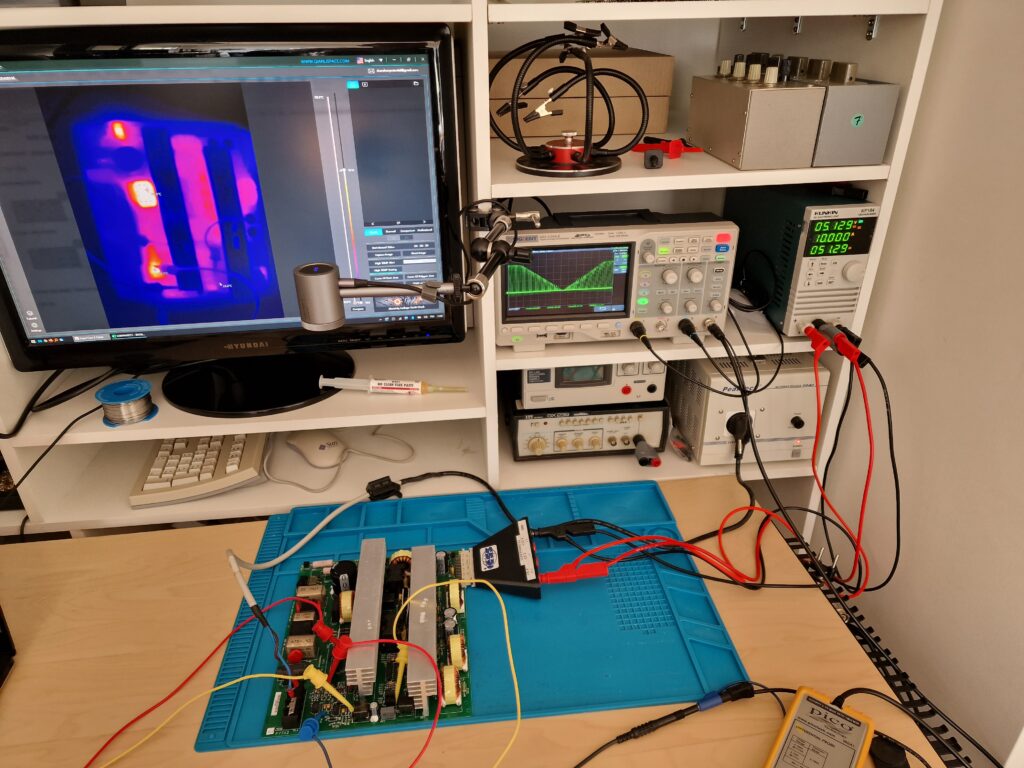
The ICSS electronics laboratory is equipped with oscilloscopes and differential probes, a microscope, a thermal camera, electronic loads and a repair station. Depending on the hardware, examination combines visual inspection, checks of power supplies and signals, detection of abnormal heating and comparison with a reference board.
Once the cause has been identified, defective components are replaced and the affected areas checked. Surrounding components that may have been stressed by the failure are also examined to limit the risk of recurrence.
Testing and qualification
A board that powers up correctly is not necessarily fit for service. After repair, power-supply boards can be tested under load while monitoring voltage, stability and temperature. Other boards are checked on a test bench or ALSPA P320 platform where the available equipment can reproduce their environment.
Depending on the board, qualification may cover I/O, communications, start-up, thresholds, redundancy or switchover. The tested configuration, useful observations and any test limitations are recorded. Available facilities are described in more detail on the Board testing and qualification platform page.
Boards and equipment frequently repaired
The references below are examples of hardware regularly handled. This list is not exhaustive.
- Martek Power supply boards:
AL129A,AL119,AL120andAL122. ICSS has developed particular experience with this family, having repaired more than 25 failed boards. - GE Fanuc power-supply boards:
IC697PWR711andIC697PWR724. - ALSPA-S range power-supply boards:
S502,S505,S506,S507,S508andS582. - I/O boards for
CE2000racks:LE108(all types),LC105,LC106,AH115,AS111andIR139.
Other ALSPA P320, GE Fanuc or associated boards can be assessed even if they are not listed here. Feasibility depends on the nature of the fault, available documentation, board condition and the facilities required for qualification.
Repair, programming and configuration
A repair may require restoration of firmware, configuration or module-specific data. ICSS understands the loading chains used on ALSPA P320 and has dedicated tools for certain equipment, including MPM123, STI171, TTM211, UMT162 and BEM340.
These operations are provided as a separate service where the board must be adapted to a specific reference, version or role in the architecture. See ALSPA P320 board programming and qualification for the relevant tools, modules and firmware.
Spare parts, lead time and warranty
ICSS maintains a stock of components, reference boards and spare parts to accelerate diagnostics and, where possible, repair. Repairs carried out by ICSS carry a two-year warranty.
For urgent requirements or where repair is not possible, a replacement may be sourced from the available spare parts. General capabilities are presented on the ALSPA hardware, laboratory and spare parts page.
Request an assessment
For an initial assessment, please provide the complete board reference, revision, the system in which it is installed, observed symptoms and tests already performed where possible. Clear photographs of the front, rear, labels and damaged areas often make it possible to assess feasibility quickly.